Understanding Consumer Behavior for HVAC: What Data to Collect and Why
To truly thrive, businesses need to understand their customers on a deeper level. This means diving into Consumer Behaviour for HVAC – learning what makes them tick, what drives their decisions, and how to best meet their needs before they even know they have them. By collecting and analyzing the right data, HVAC companies can move beyond reactive service to proactive, targeted marketing that converts.
At HomeRank Ads, we specialize in understanding consumer behaviour to help HVAC companies attract more leads.
Key Takeaways
Understanding consumer behaviour is no longer optional for HVAC success; it's essential for targeted and effective marketing.
Key data points include demographics, purchase/service history, service preferences, website engagement, and customer feedback.
Analyzing this data allows for predictive marketing, personalized communication, optimized service offerings, and improved customer retention.
Start data collection by maximizing your existing CRM, implementing surveys, and training your team.
Marketing partners like HomeRank can centralize, analyze, and streamline your data, turning insights into actionable, revenue-generating marketing campaigns.
1. Why Consumer Behaviour is Crucial for HVAC Marketing
Imagine trying to sell a heavy winter coat in the middle of a Florida summer; without understanding local needs, your efforts are wasted.
The same principle applies to the HVAC industry, where timing and relevance determine whether a lead converts or clicks away. Understanding consumer behaviour allows you to anticipate needs by predicting when customers will require new installations or repairs based on system lifespans and historical usage.
This specific insight enables you to personalize marketing messages that resonate directly with individual segments, which significantly increases your conversion rates compared to "blanket" advertising.
Ultimately, these data-driven strategies allow you to optimize service delivery and stay ahead of the competition by creating a superior, proactive customer experience.
2. Key Data Points to Collect
Collecting the right data is the essential foundation of any effective consumer behavior strategy.
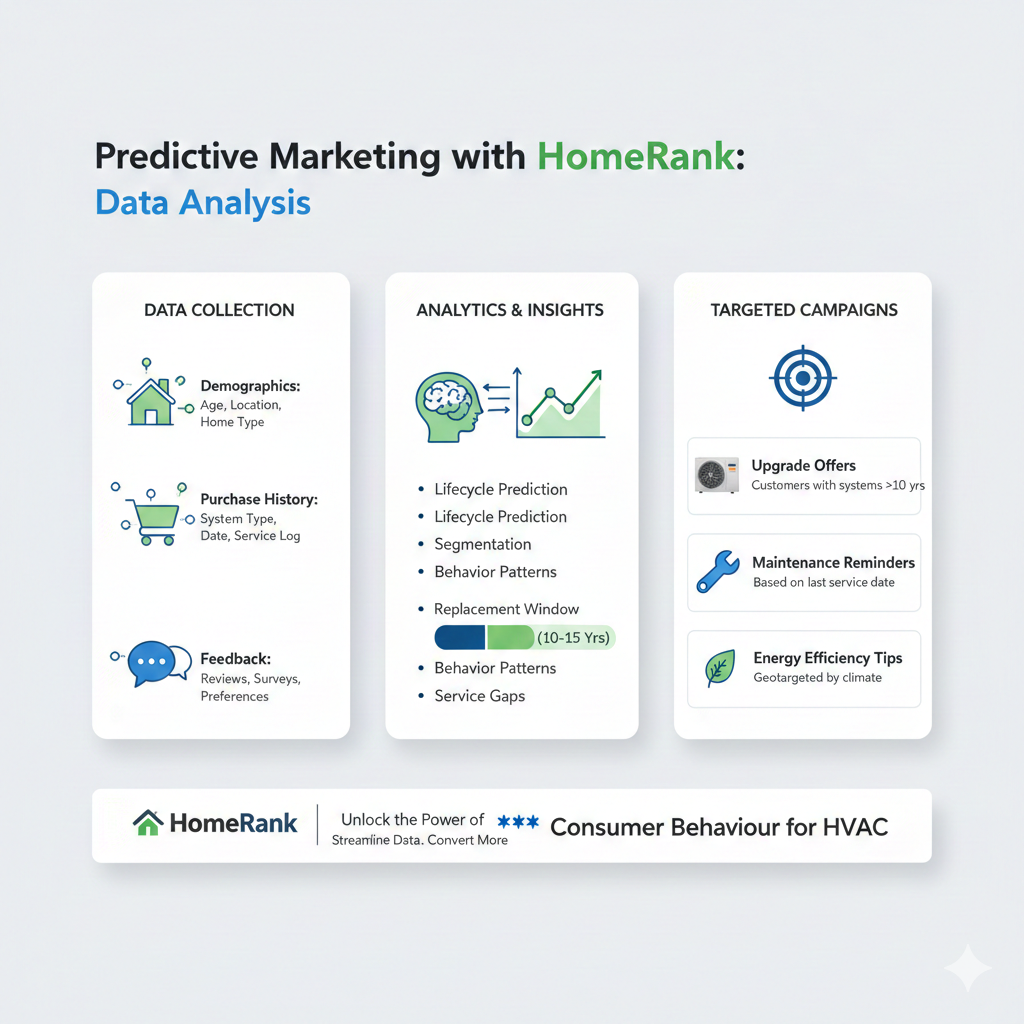
Demographics: You should track age, income level, and household size to understand a customer's purchasing power and specific system requirements. This information helps you decide whether to pitch high-end air purification systems or budget-friendly repair options.
Purchase History: Documenting the system type, brand, and installation date allows you to estimate when a unit will reach its end-of-life. Knowing a unit is twelve years old allows you to shift your messaging from "repair" to "replacement" at exactly the right time.
Service Preferences: Keeping a record of preferred communication channels and scheduling habits ensures you interact with clients on their own terms. Respecting a customer's preference for text updates over phone calls significantly boosts your brand's perceived professionalism.
Website Engagement: Monitoring page views and search queries helps identify which services, such as energy-efficient upgrades, are currently trending. If a user spends five minutes on your "Heat Pump" page, you have a clear indicator of their current interests.
Feedback and Reviews: Direct insights from surveys and online reviews provide a clear picture of your company's strengths and areas for improvement. This qualitative data tells you exactly why a customer chose you over a competitor.
Gathering these diverse data points creates a comprehensive profile that informs every aspect of your business operations.
3. How Data Analysis Drives Targeted Campaigns
Once you have collected the raw information, the real value emerges through detailed analysis and pattern recognition.
Predicting Needs and Lifecycle
By analyzing the age of installed equipment across your database, you can predict exactly when a customer is entering a high-risk window for breakdowns.
For instance, a customer with a 12-year-old AC unit should receive targeted content regarding modern, high-efficiency replacements before their current system fails.
This proactive approach positions your company as a consultant rather than just a repair service.
Personalized Messaging
Generic marketing often gets ignored, but data allows for hyper-personalized messaging that speaks to a customer's specific situation. Instead of a broad "Spring Special" blast, you can send tailored reminders to homeowners with specific furnace models that require specialized filters or parts. This level of detail builds trust and demonstrates that you are paying attention to their unique home needs.
Improving Customer Retention
Understanding why customers stay or leave helps you build stronger, more resilient relationships over time. You can use data to identify "at-risk" customers who haven't booked a service in over a year and re-engage them with a personalized loyalty offer. Consistent data tracking ensures that no lead or past customer falls through the cracks.
4. Getting Started with Data Collection
It might seem daunting to begin, but you can start small by maximizing the tools you already have in place.
First, ensure your CRM (Customer Relationship Management) software is being used to its full potential by requiring technicians to log detailed notes after every call.
Next, implement automated post-service surveys to capture immediate feedback while the experience is still fresh in the customer's mind.
You should also encourage your team to ask about future home improvement plans during routine maintenance visits to gauge upcoming needs.
Finally, use website analytics to see which blog posts or service pages are attracting the most traffic from local users.

5. HomeRank: Your Partner in Data-Driven Consumer Behaviour-Based HVAC Lead Generation
Implementing a system to track Consumer Behaviour for HVAC effectively can be complex, often requiring technical expertise and strategic planning. This is where HomeRank becomes an invaluable partner by specializing in customized data solutions and interactive content designed specifically for the HVAC industry.
HomeRank assists HVAC companies by:
Designing engaging quizzes, surveys, and calculators: These tools are tailored to your specific services to capture customer preferences and property details naturally during the lead generation process.
Integrating data collection seamlessly: HomeRank syncs with your existing website and marketing platforms to ensure every customer interaction is recorded without manual entry errors.
Providing robust analytics and reporting: The platform transforms raw numbers into clear reports, helping you identify exactly which service offerings are trending in your local market.
Offering strategic guidance: HomeRank helps you leverage the data collected to personalize marketing campaigns and optimize your long-term lead nurturing efforts.
Ensuring compliance and data security: Your customers' sensitive information is protected with industry-standard security while you maximize your lead generation potential.
With HomeRank’s expertise, HVAC companies can streamline their implementation process and ensure their marketing is driven by data rather than guesswork. This transition leads to higher conversion rates, more efficient scheduling, and a significantly stronger return on investment for your business.
Start generating qualified leads with HomeRank today.