Google Ads for Home Builders: The 2026 Guide to Quality Leads
For home builders, a lead isn't just a name and an email - it’s a potential six or seven-figure contract. Yet, many builders treat Google Ads like a slot machine, pouring money into broad terms like "new houses" only to receive clicks from window shoppers or people looking for rentals.
To win in 2026, your Google Ads strategy must shift from volume to intent. This guide breaks down how to structure your campaigns to capture serious buyers and stop wasting your ad spend.
HomeRank Ads specializes in Google Ads for home builders and other contractor industries. Contact us today to get started.
Key Takeaways
Intent > Volume: One click from a motivated buyer is worth 100 clicks from "dreamers."
Structure for Success: Use TTAGs to keep your messaging hyper-relevant and your costs low.
Exclude the Waste: A strong Negative Keyword list is your best defense against high ad spend.
Target the Wallet: Use Income and In-Market targeting to find users who can actually sign a contract.
Convert on the Page: Send traffic to a fast, mobile-friendly landing page, not a cluttered homepage.
1. The Foundation: Campaign Structure
For home builders, account structure is the difference between a high-performing asset and a leaky bucket. A messy structure forces your ads to compete against each other, driving up your own costs.
Community-Specific Campaigns
If you have multiple developments, give each its own campaign. This allows you to allocate specific budgets based on inventory. If one target area is almost sold out, you can dial back its spend without affecting another, which just broke ground.
The Power of TTAGs
Tightly Themed Ad Groups ensure that if someone searches for Modern Farmhouse Floor Plans, they see an ad for a farmhouse, which leads to a page featuring those specific designs. This triple-match increases your Quality Score, which Google uses to lower your Cost-Per-Click.
Brand Protection
Always run a Brand campaign. Competitors can bid on your company name. By bidding on your own name, you ensure you own the top spot on the search results page and control the messaging your past clients and referrals see first.
2. Keyword Strategy: Stop Chasing Dreamers
In the home building industry, high volume keywords are often high waste keywords. You want to target commercial intent. Here are some key tips you need to know:
Long-Tail is King: New homes is too broad. New 4-bedroom homes for sale in Guelph is a buyer. Focus on 3-5 word phrases that include a location and a specific feature, such as main floor master suite builders.
The Luxury Filter: If you are a high-end builder, use qualifying keywords like Custom, Architectural, Luxury, or Estate. This discourages clicks from users looking for entry-level starter homes.
Negative Keyword Lists (The Shield): Building a comprehensive negative list is a daily task. You must proactively exclude:
Career Seekers: jobs, salary, hiring, glassdoor.
Low-Budget: cheap, affordable, mobile home, prefab, used.
Non-Buyers: rentals, apartments, floor plan software, DIY, how to build.
3. Ad Copy: Selling the Dream (and the Deadline)
In 2026, Responsive Search Ads are the standard. Google tests multiple headlines to see which performs best, but you provide the ingredients.
Address Pain Points
Use headlines like Avoid the Bidding War or Move-In Ready by Summer. These address the immediate frustrations of the current real estate market.
Specific Call-to-Actions
Learn More is weak. Use these instead:
View Available Lots
Download Our Lookbook
Schedule a Private Tour.
Ad Extensions
Use Sitelink Extensions to link to Floor Plans, Gallery, and Financing. Use Location Extensions to show the user exactly how far they are from your model home.
4. Geo-Targeting: Precision Over Proximity
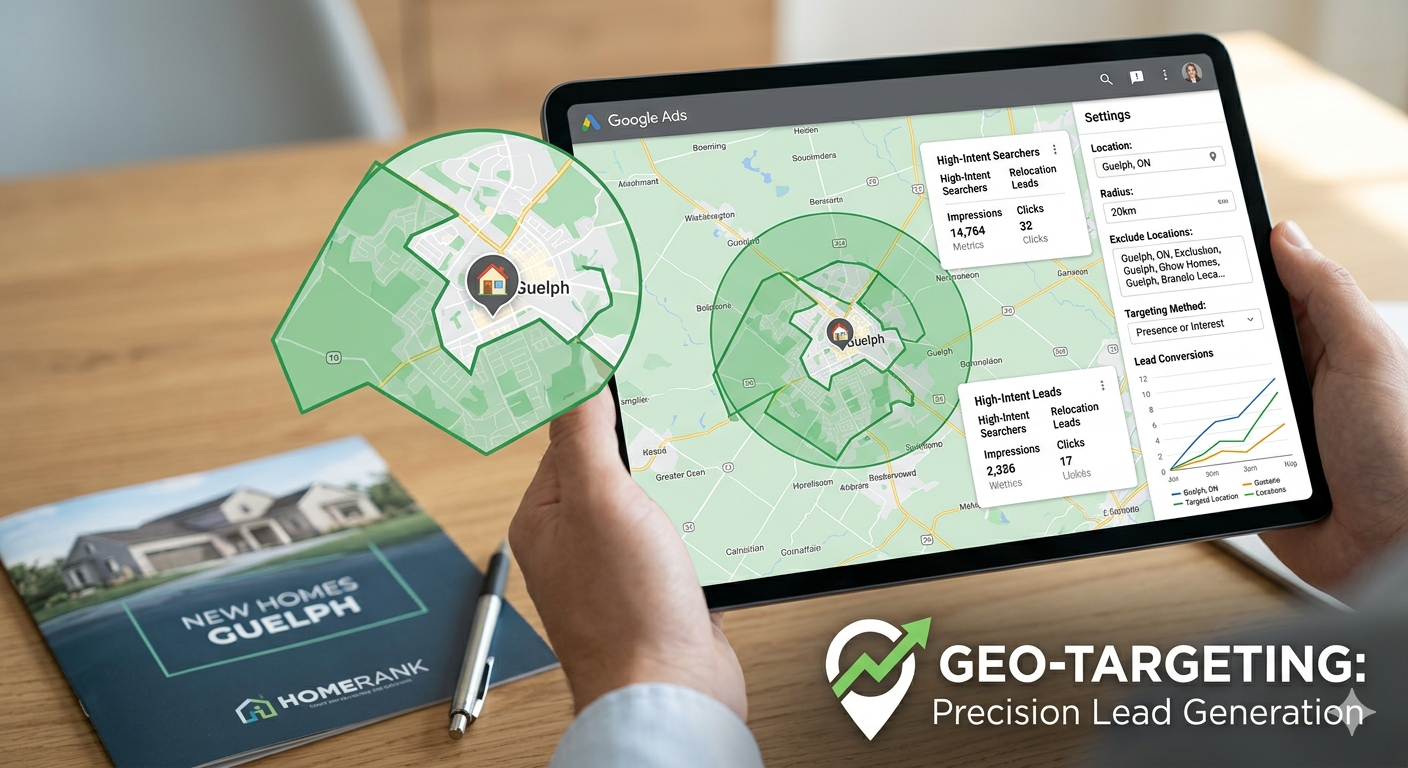
You don't need to show your ads to the entire province. You need to show them to people who can afford your homes and are likely to move.
Income Targeting
Google allows you to target the Top 10% or Top 11-20% of household incomes in a specific area. If you are building luxury estates, this is an essential filter to reduce wasted spend on unqualified clicks.
Exclusion Zones
If there is a neighboring city that does not fit your buyer demographic, exclude that zip code entirely. Don't waste a single cent on a click from an area that won't convert.
Targeting In-Market Audiences
Layer your geographic targets with Google’s In-Market audience for Residential Properties (For Sale) or Moving & Relocation. This ensures you aren't just targeting someone in the right city, but someone actively looking for a home.
5. Landing Pages: Converting Clicks to Consultations
Your landing page is your digital model home. It must be as pristine and professional as the houses you build. Here’s the top three things to keep in mind.
Speed is a Ranking Factor: A 1-second delay in page load can lead to a 20% drop in conversions. Ensure your high-res gallery images are optimized and compressed.
Trust Signals: Builders live and die by reputation. Include a section for Awards, Years in Business, and a rotating testimonial block from happy homeowners.
Frictionless Forms: Don't ask for a 20-field questionnaire. Ask for Name, Email, Phone, and Timeline to Build. You can qualify them further on the first phone call.
6. Optimization: The Anti-Waste Checklist
Optimization isn't set it and forget it. It’s an iterative process of cutting what fails and doubling down on what works. Be sure to monitor:
Device Performance: Check if your leads are coming from mobile or desktop. Often, mobile gets the most clicks, but desktop gets the most long-form lead submissions. Adjust your bids accordingly.
Time of Day: If your sales team only answers the phone from 9 AM to 5 PM, consider bid shifting to spend more during those hours so you don't miss live calls.
Conversion Tracking: Ensure you are tracking micro-conversions like Clicks to Call or Floor Plan PDF Downloads. This gives Google’s AI more data to learn who your ideal customer is.
Implementing a successful Google Ads campaign in 2026 requires more than just high bids; it demands a strategic, intent-focused approach tailored to the unique landscape of the home building industry.
By prioritizing precise audience targeting, crafting compelling and relevant ad copy, and optimizing for high-converting landing pages, you can effectively reach qualified leads while minimizing wasted ad spend.
This proactive, data-driven methodology ensures your marketing budget is an investment in generating real, motivated buyers, positioning your business for sustainable growth in a competitive market.

Ready to Build Your Pipeline?
Homerank is ready to help you navigate this complex terrain and capture the leads that build your business.
Don't let your marketing dollars go to waste on unqualified clicks.
Contact us today for a professional audit of your current Google Ads account, or let our experts help you launch your very first campaign.